
Retaining Walls Contractors Annapolis: What Actually Makes a Wall Collapse After One Wet Winter
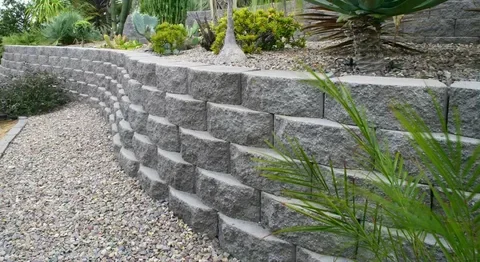
Retaining walls that fail in Annapolis after one or two winters almost never fail because of the weather. They fail because of what was behind them before the weather arrived. The freeze-thaw cycle, the hydrostatic pressure that builds during Maryland's wet winters, and the clay soil conditions common across Anne Arundel County all exist on every site. Retaining wall in Annapolis failures are not weather events. They are engineering events that the weather reveals.
Hydrostatic Pressure Is the Force That Actually Breaks Most Walls
Retaining walls contractors in Annapolis who do not install adequate drainage behind the wall are building a structure that will collect water in the soil it is retaining rather than allowing that water to discharge. When water saturates the retained soil, the pressure that soil exerts on the back of the wall increases dramatically beyond what the dry-soil design loads assumed. Most residential retaining walls are not engineered for saturated soil loads because the drainage was supposed to prevent saturation from occurring.
The Maryland winter compounds this problem. When saturated soil freezes, it expands. When it thaws, the wall has been pushed incrementally further from its original position. One freeze-thaw cycle is unlikely to cause visible failure. Three or four winters of this cycle in a wall without proper drainage produces the lean, the crack, or the section collapse that homeowners describe as sudden but that has been developing for years.
What Adequate Drainage Behind a Retaining Wall Actually Requires
A retaining wall without drainage behind it is an incomplete installation regardless of how good the face materials look. Retaining walls contractors in Annapolis who include proper drainage in their wall installations build drainage aggregate backfill directly behind the wall, a perforated drain pipe at the base of the wall to collect and discharge water, and weep holes or drainage outlets at regular intervals through the wall face to relieve pressure if the drainage system becomes overloaded.
Why Wall Height Changes the Engineering Requirement
Walls over four feet in height are considered engineered retaining structures in Maryland and require a structural engineering review as part of the permit process. The loads on a four-foot wall are not just proportionally larger than the loads on a two-foot wall. They are categorically different because the volume of soil being retained and the lever arm that soil exerts on the base of the wall change the failure mode entirely. Retaining wall in Annapolis installations over four feet built without engineering review are not just unpermitted. They are structurally speculative.
The footing depth requirement changes with wall height as well. A wall footing that is appropriate for a two-foot landscape wall is not adequate for a four-foot grade change wall. Frost depth in Anne Arundel County requires footings to be placed below the freeze line, which means taller walls need deeper footings than many contractors specify for shorter walls in the same soil conditions.
Signs a Retaining Wall Is Failing Before It Collapses
Most retaining wall failures announce themselves before the collapse occurs. A visible lean away from the retained soil, horizontal cracking along the middle third of the wall face, vertical separation at the ends or joints of block units, and soil or stone appearing behind weep holes are all signs that the wall is experiencing structural stress beyond its design capacity.
Retaining walls contractors in Annapolis who are asked to assess an existing wall should be able to identify these failure precursors before they become an emergency. Laser Cut Property Services evaluates existing retaining walls as part of site assessments for new landscape projects and can identify whether an existing wall requires remediation, reinforcement, or replacement before the next wet winter tests it again.
The Wall That Looks Solid This Spring May Not Look the Same Next March.
Retaining walls that have survived several winters without visible distress are not necessarily sound. They may simply not have experienced the combination of sustained saturation and hard freezing that reveals the drainage failure behind them. Laser Cut Property Services builds retaining walls in Annapolis with drainage aggregate backfill, perforated drainage pipe at the base, and proper weep hole placement as standard elements rather than optional additions.
Homeowners with an existing wall that has begun to lean or crack, or those planning a new wall installation, will find the technical standard and the team here that makes the difference between a wall that holds and one that does not.
FAQS
Q: What is the most common cause of retaining wall failure in Annapolis?
A: Hydrostatic pressure from saturated soil behind the wall is the primary cause, almost always resulting from inadequate drainage installation rather than the wall material itself.
Q: Do retaining walls in Annapolis require a building permit?
A: Walls over four feet in height are considered engineered retaining structures in Maryland and require a structural engineering review and building permit before construction begins.
Q: What drainage components should be behind every retaining wall in Annapolis?
A: A properly built wall requires drainage aggregate backfill, a perforated drain pipe at the wall base, and weep holes at regular intervals through the wall face to prevent hydrostatic pressure buildup.
Q: How deep should retaining wall footings be in Anne Arundel County?
A: Footings must be placed below the frost line for Anne Arundel County, which requires deeper placement for taller walls than the standard footing depth used for shorter landscape walls.
Q: Can a leaning retaining wall be repaired or does it need to be rebuilt?
A: It depends on how far the wall has moved and whether the drainage failure driving the lean can be corrected. A professional assessment determines whether repair or full rebuild is the appropriate response.