
Annapolis Landscaping: Why Your Yard Floods Even When the Design Looks Perfect
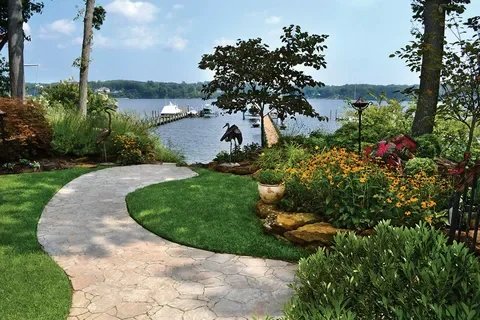
A yard can look exactly the way it was designed to look and still collect standing water after every significant rain. The plants are in, the mulch is fresh, the lawn is green, and there is a puddle in the same corner of the yard every time the sky opens up. This is not a rare situation in Annapolis. It is one of the most common complaints homeowners bring to landscaping professionals after a project is complete, and it almost always traces back to drainage being treated as a secondary consideration rather than the starting point of the design. Annapolis landscaping that solves this problem starts with the ground, not the garden.
The Drainage Problem That Surface-Level Design Misses
Landscape drainage in Annapolis is complicated by the region's soil composition, proximity to the Chesapeake Bay watershed, and the elevation changes that characterize many Anne Arundel County properties. Clay-heavy soil does not drain the way sandy or loamy soil does, and water that cannot percolate downward has to go somewhere. If the grade does not direct it away from the home and toward a discharge point, it collects.
Most drainage failures in Annapolis yards are not the result of a catastrophic design error. They are the result of small grading decisions that were not verified against the actual water movement patterns of the specific property. A two-percent slope in the wrong direction is invisible at the design stage and obvious during the first heavy rain.
How Water Moves Through an Annapolis Yard That Was Not Graded Correctly
Laser Cut Property Services approaches every landscape project with a drainage and grading assessment before any design work begins. The assessment maps how water currently moves across the property, where it collects, and what the discharge path needs to be before anything is planted or hardscaped. Landscape drainage in Annapolis done correctly means the final design works with those water movement patterns rather than ignoring them until a problem appears.
Why Hardscape Makes the Problem Worse When Drainage Is Not Addressed First
Adding a patio, walkway, or retaining wall to a yard with existing drainage issues does not solve the problem. In most cases, it compounds it. Impermeable hardscape surfaces increase runoff volume and redirect it to wherever the path of least resistance leads, which is often toward the foundation, against the fence, or into the neighbor's yard. Annapolis landscaping that installs hardscape over an unresolved drainage situation is building on a problem rather than addressing it.
The right sequence is drainage first, then hardscape, then planting. Laser Cut Property Services follows this order on every project because the structural integrity of everything built on top depends on the ground underneath being managed correctly. Skipping drainage to get to the more visible parts of the project faster is how landscapes look great for a season and fail by the second spring.
The Solutions That Actually Resolve Drainage Instead of Masking It
French drains, catch basins, channel drains, and dry creek beds are all tools in the drainage resolution toolkit, and the right one depends on what the property's specific water movement pattern requires. A French drain that works well on a flat suburban lot may be completely inappropriate for a sloped waterfront property where the volume and velocity of runoff are both higher.
Landscape drainage in Annapolis through Laser Cut Property Services is specified after the property assessment rather than defaulted to the same solution for every yard. The goal is to move water efficiently off the property or to a managed collection point without disrupting the finished landscape or requiring ongoing maintenance that the homeowner was not told about at the design stage.
That Corner of Your Yard That Floods After Every Storm Is Telling You Something. Here Is What It Is Saying.
Standing water in the same location after every rain is not bad luck. It is a drainage signal that the current grade, soil condition, or hardscape configuration is directing water somewhere it has nowhere to go. Laser Cut Property Services has solved this exact problem on properties across Annapolis and Anne Arundel County with drainage solutions that are matched to the specific conditions of each yard rather than applied generically.
FAQs
Q: Why does my Annapolis yard flood even after a professional landscaping project?
A: Most post-project flooding traces to grading that was not verified against actual water movement patterns before the design was finalized, leaving low points that collect runoff with nowhere to go.
Q: What drainage solutions are most effective for Annapolis yards?
A: French drains, catch basins, channel drains, and dry creek beds are all used depending on the specific water movement pattern of the property, which requires an on-site assessment to determine correctly.
Q: Does clay soil cause more drainage problems in Annapolis than other soil types?
A: Yes. Clay-heavy soil common in Anne Arundel County has poor percolation, meaning water that cannot soak in must be directed away through grading and drainage infrastructure rather than absorbed naturally.
Q: Can adding a patio make an existing drainage problem worse?
A: Yes. Impermeable hardscape increases runoff volume and can redirect water toward foundations or adjacent properties if drainage was not addressed before the patio was installed.
Q: How much slope does a yard need to drain properly away from a home?
A: A minimum two-percent grade away from the foundation is the standard recommendation, though the specific grade needed depends on soil type, hardscape coverage, and the property's natural water movement.